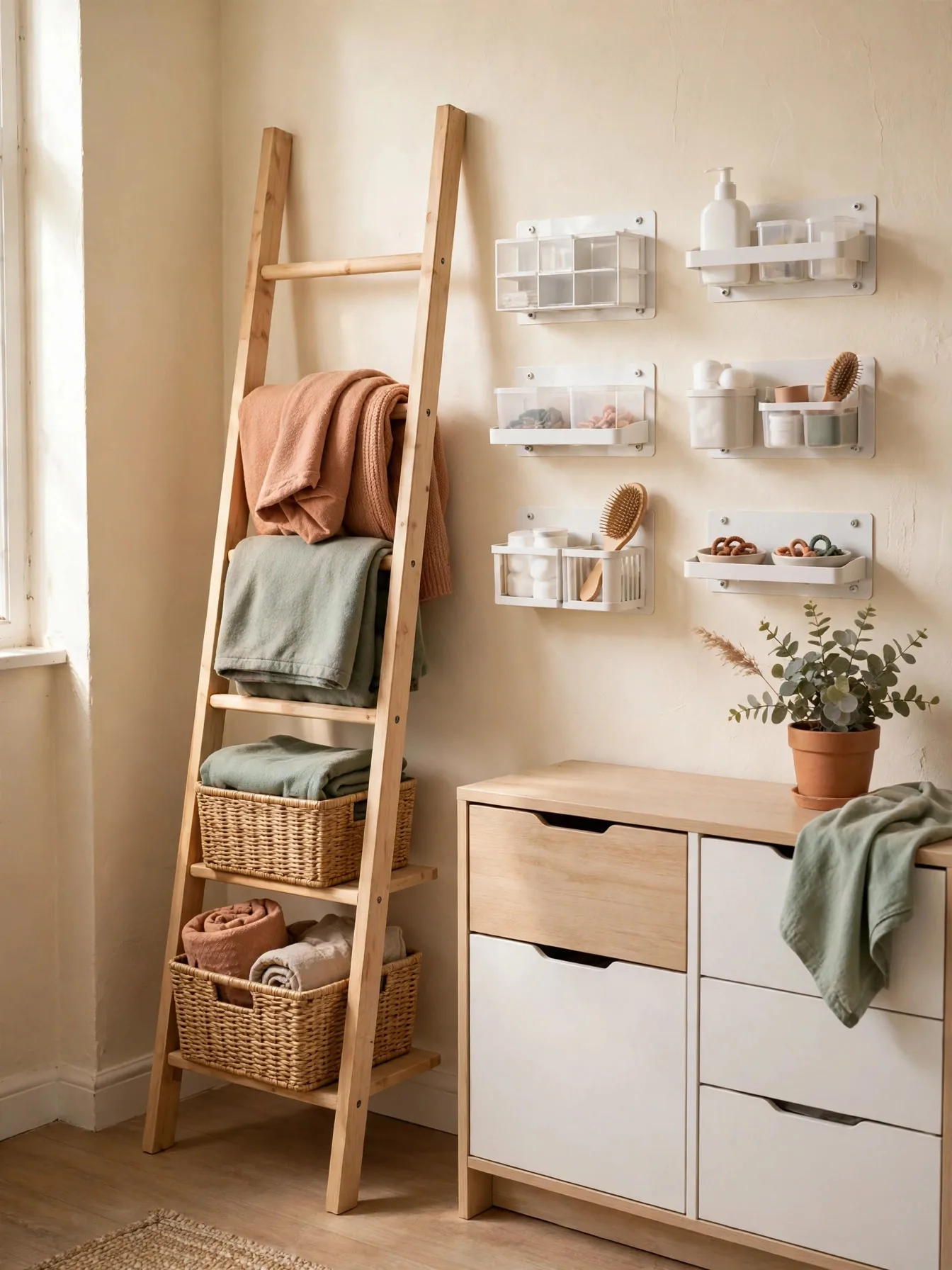
Almost every renter product on the shelf says “removable” and “damage-free” in the same breath, as if the two words meant the same thing. They do not. Removable just means you can take it down. Damage-free means the wall looks exactly as it did before you put it up — and that second promise depends on the product, the surface underneath it, and how you take it off. Most renters searching for removable shelves damage free renters can actually trust are really asking one question: which of these products will cost me part of my deposit, and which will not? For the manufacturer’s own weight limits and removal guidance, see 3M Command.
This guide audits the claim class by class. Every no-drill method — adhesive, suction, tension, over-door, nano tape, leaning — gets the same treatment: how it holds, what damage it can genuinely leave behind, which surfaces raise or lower the risk, and how to prevent the damage it is known for. Where a package prints a weight rating, we treat it the way you should: as a manufacturer rating measured in ideal conditions, not a promise about your wall. Our verdicts follow the same evidence standard we describe in how we test, and for the head-to-head comparison of shelf styles themselves, see our guide to no-drill shelves for apartment walls compared method by method.
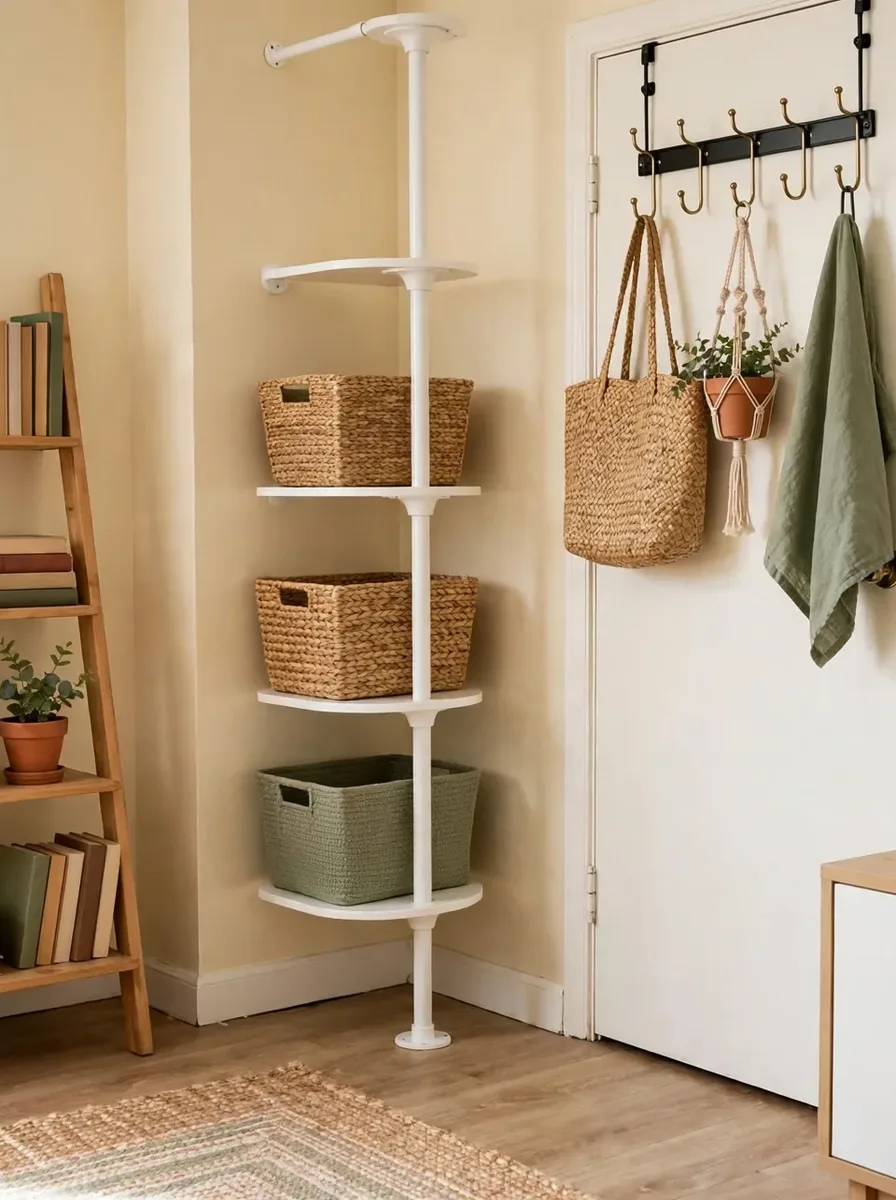
What “Damage-Free” Actually Means: Four Kinds of Damage
Before judging any product, it helps to name what landlords and inspection reports actually count as damage. There are four kinds, and each method is prone to a different one.
Holes and tears. The obvious one. No product in this guide drills, but a tear is the adhesive version of a hole: a strip that rips the paper face off drywall or lifts a patch of paint leaves a defect that has to be filled and painted, exactly like a small hole.
Paint damage. Peeling, lifting, bubbling or a visible sheen difference where a product sat. Paint damage is the most common deposit deduction from “damage-free” products, and it is almost always an adhesive story — or a moisture story, when a sealed organizer traps damp against the wall.
Residue. Adhesive film, tape gel or sticky patches left behind. Residue is the least serious kind — it usually wipes or rolls off — but it collects dust, darkens over months, and reads as grime on an inspection walkthrough if you leave it.
Pressure and friction marks. Rings, dents and scuffs from things that press or rub rather than stick: tension-rod end caps, over-door hooks, the top rail of a leaning shelf. These are usually faint and often cleanable, but on soft paint or glossy door frames they can be permanent.
Keep those four in mind. A product can honestly be damage-free against three of them and still fail the fourth — and the marketing never tells you which one.
Every Method at a Glance: The Risk Table
| Method | Holds by | Typical package rating | Damage it can leave | Risk level | Truly damage-free when… |
|---|---|---|---|---|---|
| Freestanding / leaning shelf | Gravity, floor carries the load | 20–50 lb (9–23 kg) per shelf | Wall scuffs, floor dents from feet | Very low | Feet are padded and the top rail does not rub |
| Over-door organizer | Hooks over the door top | 10–35 lb (4.5–16 kg) total | Frame paint rub, door-edge wear | Low | Hooks are padded and the door still closes cleanly |
| Suction shelf | Vacuum seal on smooth surfaces | 5–11 lb (2.3–5 kg) | Ring marks on porous stone or matte tile | Low on glass/gloss tile, useless on texture | Surface is non-porous and cups are re-pressed monthly |
| Tension pole / rod shelf | Spring or twist pressure | 5–22 lb (2.3–10 kg) per level | End-cap rings, shallow ceiling dents, rubber transfer | Medium | Both ends are padded and it is not over-tightened |
| Adhesive shelf / hooks | Bonding strips or pads | 1–16 lb (0.5–7 kg) depending on strip size | Paint peel, drywall-paper tear, residue | Medium–high | Paint is smooth, cured 30+ days, and strips are stretch-released |
| Nano tape | Gel adhesive, reusable | Often rated 1 lb per 4 in (10 cm) of tape | Residue film, paint lift on weak paint | High on paint, low on glass/tile | Used on hard, non-painted surfaces and rolled off slowly |
Read the last column as the whole guide in miniature: there is no method that is damage-free unconditionally, and there is almost no method that cannot be damage-free under the right conditions. The sections below go through each one properly.
Adhesive Shelves and Hooks: The Paint-Peel Risk
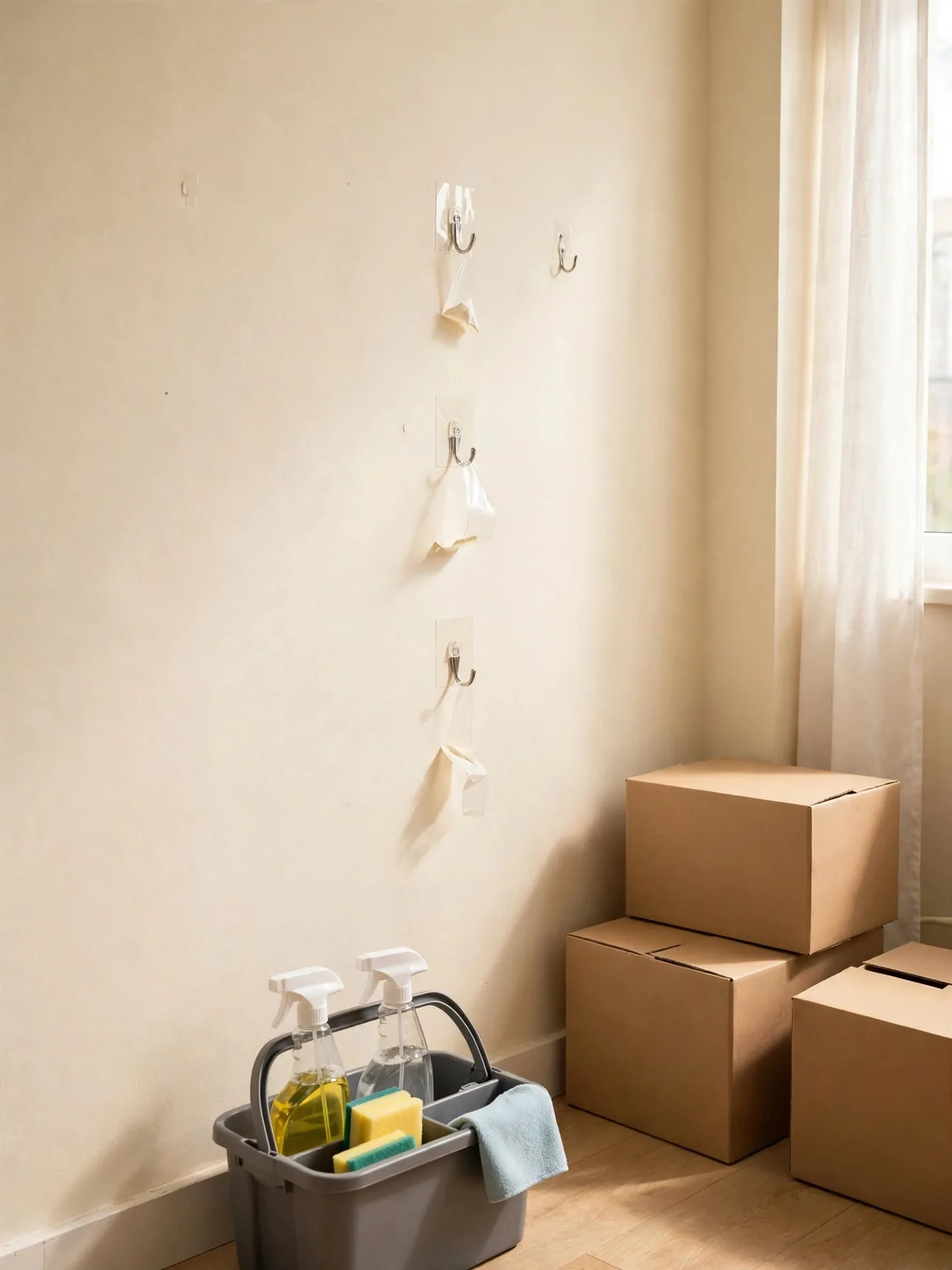
Adhesive is where the “damage-free” claim goes to be tested. Stretch-release strips — the kind with a pull tab — genuinely do release cleanly from smooth, fully cured paint, and that clean release is what the entire category’s reputation rests on. The failures come from surfaces the fine print excludes: paint cured for less than about 30 days, old paint that is already losing its grip on the wall, chalky or matte paints, textured finishes, and wallpaper, where the strip can bond more strongly than the paper bonds to the wall.
The damage, when it happens, happens at removal. Pull a strip outward, or twist a bracket off, and the bond fails through the paint layer instead of through the adhesive — you take a paint chip, or a coin-sized patch of drywall paper, with the shelf. Weight makes it worse in a quieter way: a shelf loaded near its package rating (common adhesive shelves are rated around 5–15 lb / 2.3–7 kg for a pair of large strips) creeps over months in warm rooms, and a shelf that falls tears paint on the way down.
Prevention. Test one strip in a hidden spot — behind a door, inside a closet — for a week before committing a visible wall. Clean the wall with rubbing alcohol and let it dry fully before applying. Load to half the package rating, not the full figure. At removal, pull the tab slowly straight down, parallel to the wall, stretching it 12–15 in (30–38 cm) until the strip releases. For the full surface-by-surface breakdown, our guide to adhesive hooks for renters: weight limits, surfaces and removal covers strip sizes and ratings in detail.
Verdict: damage-free on good paint with correct removal; the single riskiest mainstream method on anything else. Typical cost: $10–$35 for a shelf, $5–$30 for hook sets.
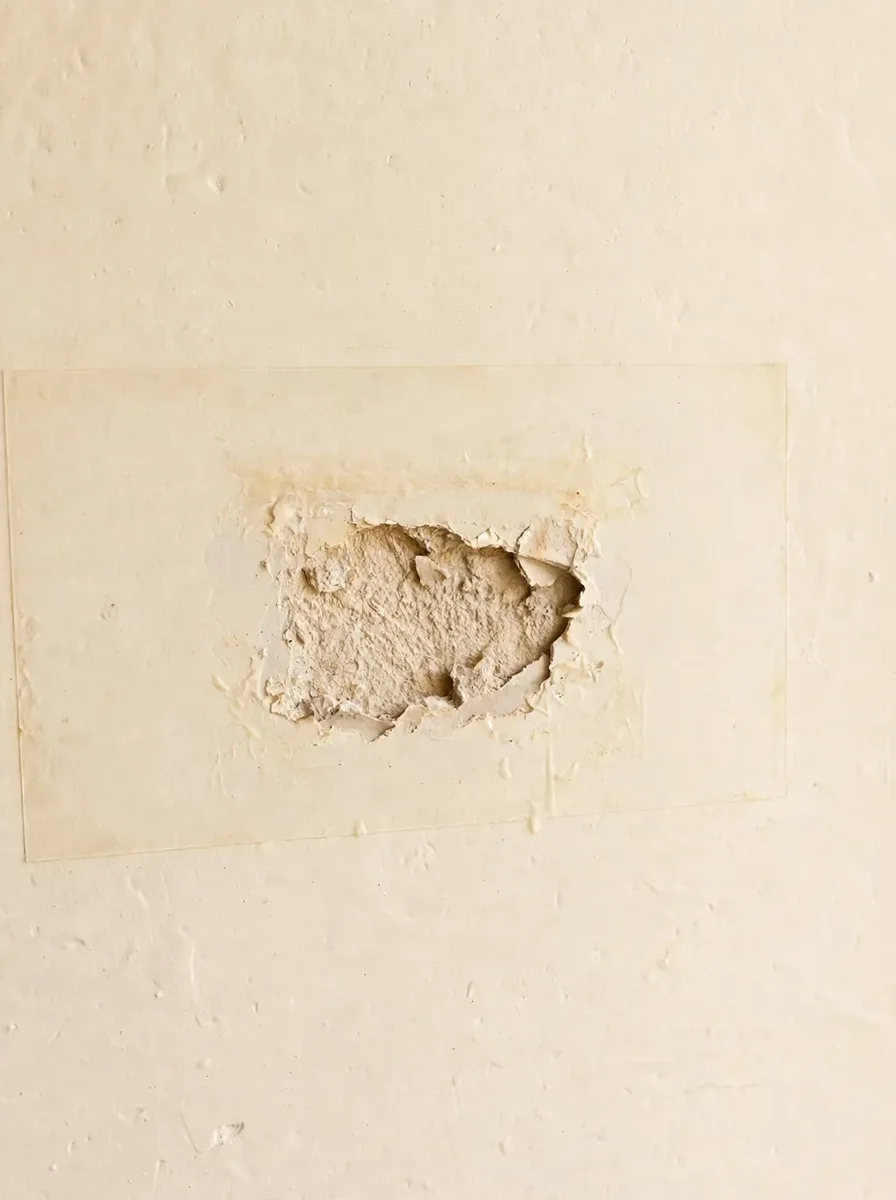
Required space: A patch of smooth, fully cured paint — test one strip in a hidden spot, behind a door or inside a closet, for a week before committing a visible wall.
Installation: Clean the wall with rubbing alcohol and let it dry fully before applying, load to half the package rating, and at removal pull the tab slowly straight down, parallel to the wall, stretching it 12–15 in (30–38 cm) until the strip releases.
Approximate dimensions: No fixed shelf size is given — common adhesive shelves are rated around 5–15 lb (2.3–7 kg) for a pair of large strips.
Rental-friendly limits: Do not use adhesive on paint cured for less than about 30 days, old paint already losing its grip, chalky or matte paints, textured finishes or wallpaper, and a shelf loaded near its package rating creeps over months in warm rooms.
Pros: Stretch-release strips genuinely do release cleanly from smooth, fully cured paint, and that clean release is what the entire category’s reputation rests on.
Cons: The single riskiest mainstream method on anything else — pull a strip outward or twist a bracket off and you take a paint chip, or a coin-sized patch of drywall paper, with the shelf.
Suitable products: Adhesive shelf ($10–$35) or hook set ($5–$30) on stretch-release strips with a pull tab.
Suction Cups: Ring Marks and Surfaces That Betray You
Suction looks like the safest technology of all — no adhesive, no pressure hardware, just a vacuum seal. On glass, mirrors and glossy ceramic tile, that reputation is earned: press the cup off and the surface is untouched, every time. The honest audit has two footnotes.
First, porous surfaces. On unglazed or matte tile, natural stone and some textured plastics, a suction cup can leave a faint ring — partly a moisture outline, partly a clean circle in the middle of a slightly grimy wall, which reads as a mark even though nothing is damaged. It wipes off with the same cleaner you would use on the tile, but renters are often surprised it exists at all. Second, failure damage: suction loses grip gradually, and a falling shelf of shampoo bottles can chip a tub edge or crack a tile it would never have marked while attached. Cups on typical bathroom shelves are 2–3.25 in (5–8 cm) across and rated around 5–11 lb (2.3–5 kg) as a package figure — treat half of that as the working load.
Prevention. Use suction only on non-porous, glossy surfaces. Wash the cup and the wall before mounting, re-press each cup monthly, and keep heavy glass bottles off suction shelves entirely.
Verdict: genuinely damage-free on glass and gloss tile; a ring-mark risk on porous stone and matte finishes; simply non-functional on texture. Typical cost: $8–$25.
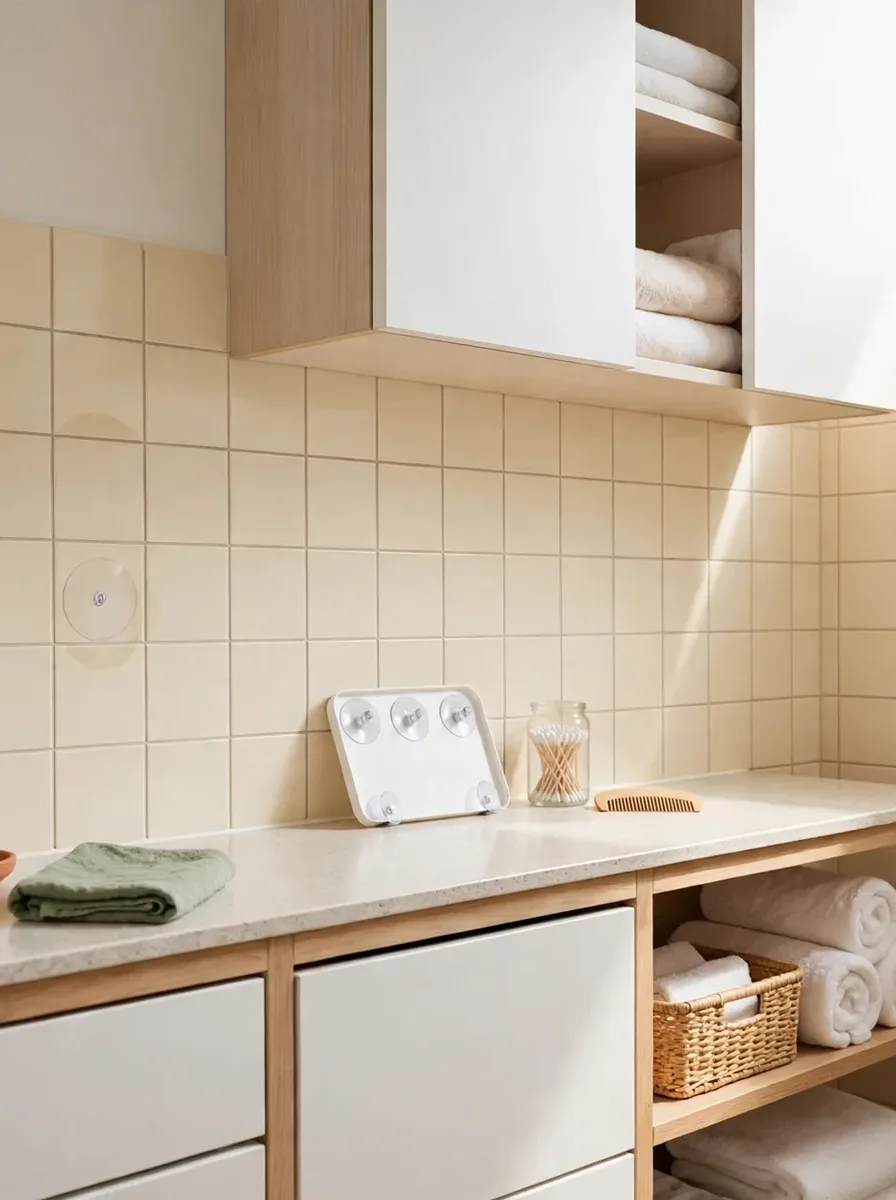
Required space: A non-porous, glossy surface — glass, mirrors or glossy ceramic tile — with the cup sitting fully on one flat face.
Installation: Wash the cup and the wall before mounting, re-press each cup monthly, and keep heavy glass bottles off suction shelves entirely.
Approximate dimensions: Cups on typical bathroom shelves are 2–3.25 in (5–8 cm) across.
Rental-friendly limits: Cups are rated around 5–11 lb (2.3–5 kg) as a package figure, so treat half of that as the working load, and suction is simply non-functional on texture and a ring-mark risk on porous stone and matte finishes.
Pros: Genuinely damage-free on glass and gloss tile — press the cup off and the surface is untouched, every time.
Cons: A falling shelf of shampoo bottles can chip a tub edge or crack a tile it would never have marked while attached, and on porous surfaces a cup can leave a faint ring.
Suitable products: Suction shelf ($8–$25).
Tension Poles and Rods: Pressure Marks at Both Ends
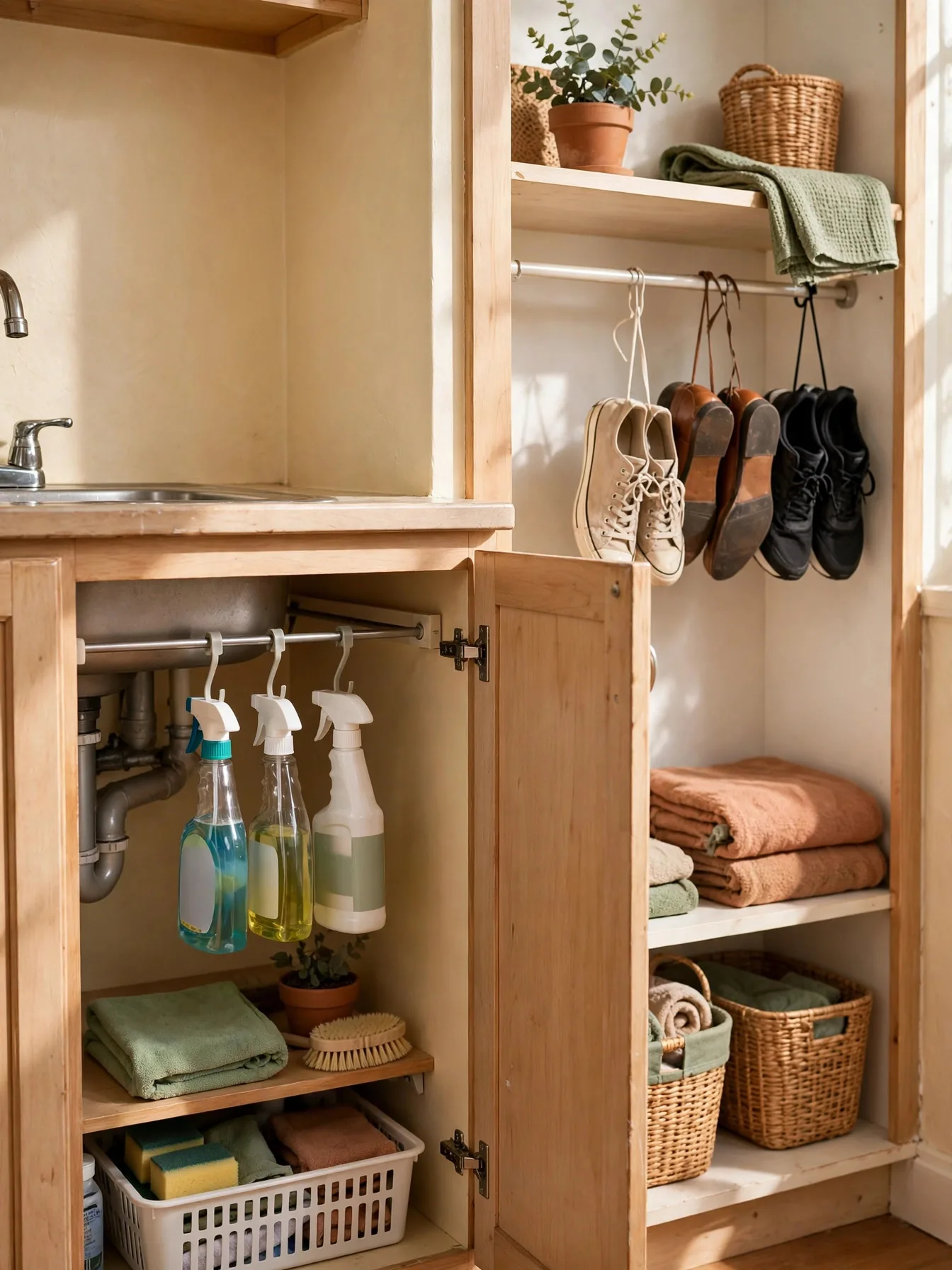
Tension products — spring poles in shower corners, rod shelves inside cabinets, floor-to-ceiling pole shelves — hold by pushing outward, and everything they might damage is at the two points where they push. The classic marks are a shallow dent or a paint ring on the ceiling, a matching compression mark on the floor or tub ledge, and, from dark rubber end caps, a grey transfer smudge that looks like a scuff but is actually rubber deposited on the paint.
How much pressure are we talking about? Enough to hold package ratings of roughly 5–22 lb (2.3–10 kg) per shelf level, which means the caps press continuously, for months, on exactly the same ring of paint. Soft ceiling paint and vinyl or laminate floors give first. The damage is rarely dramatic — nobody loses a whole deposit to a tension pole — but a visible ring on a white ceiling is exactly the kind of thing an inspector photographs.
Prevention. Put a felt or foam pad, or a wide plastic coaster, under both end caps before you tension the pole; this spreads the load and stops rubber transfer entirely. Tighten until the pole is firm, then stop — an extra half-turn adds damage risk, not useful grip. Once or twice a year, slacken, check the pads for compression, and replace them if they have gone thin. Choose white or clear end caps where the product offers them.
Verdict: damage-free with padded ends and sensible tension; ring-and-dent risk when bare caps meet soft paint or vinyl. Typical cost: $15–$60 depending on height and shelf count.
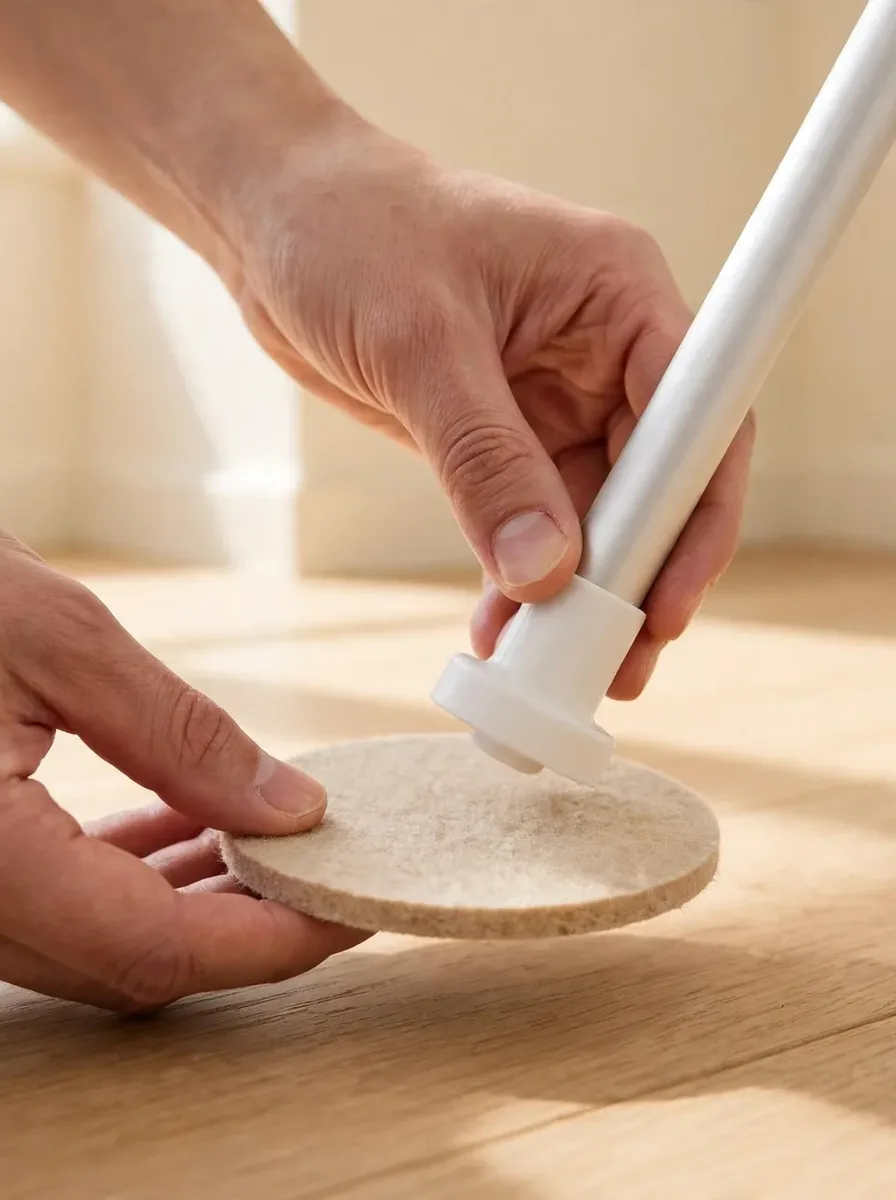
Required space: Two contact points — floor and ceiling, tub ledge, or cabinet sides — with a felt or foam pad, or a wide plastic coaster, under both end caps before tensioning.
Installation: Put a felt or foam pad under both end caps before you tension the pole, tighten until the pole is firm, then stop, and once or twice a year slacken the pole, check the pads for compression and replace them if they have gone thin.
Approximate dimensions: No fixed size is given — package ratings run roughly 5–22 lb (2.3–10 kg) per shelf level.
Rental-friendly limits: Soft ceiling paint and vinyl or laminate floors give first under the caps’ continuous pressure, dark rubber end caps can leave a grey transfer smudge, and an extra half-turn adds damage risk, not useful grip.
Pros: Damage-free with padded ends and sensible tension, since nothing bonds to the wall.
Cons: A shallow dent or paint ring on the ceiling, a matching compression mark on the floor or tub ledge, and rubber transfer from bare dark caps are the classic marks.
Suitable products: Tension pole or rod shelf ($15–$60 depending on height and shelf count), felt or foam pads, wide plastic coasters, and white or clear end caps where offered.
Over-Door Organizers: The Quiet Frame Rub
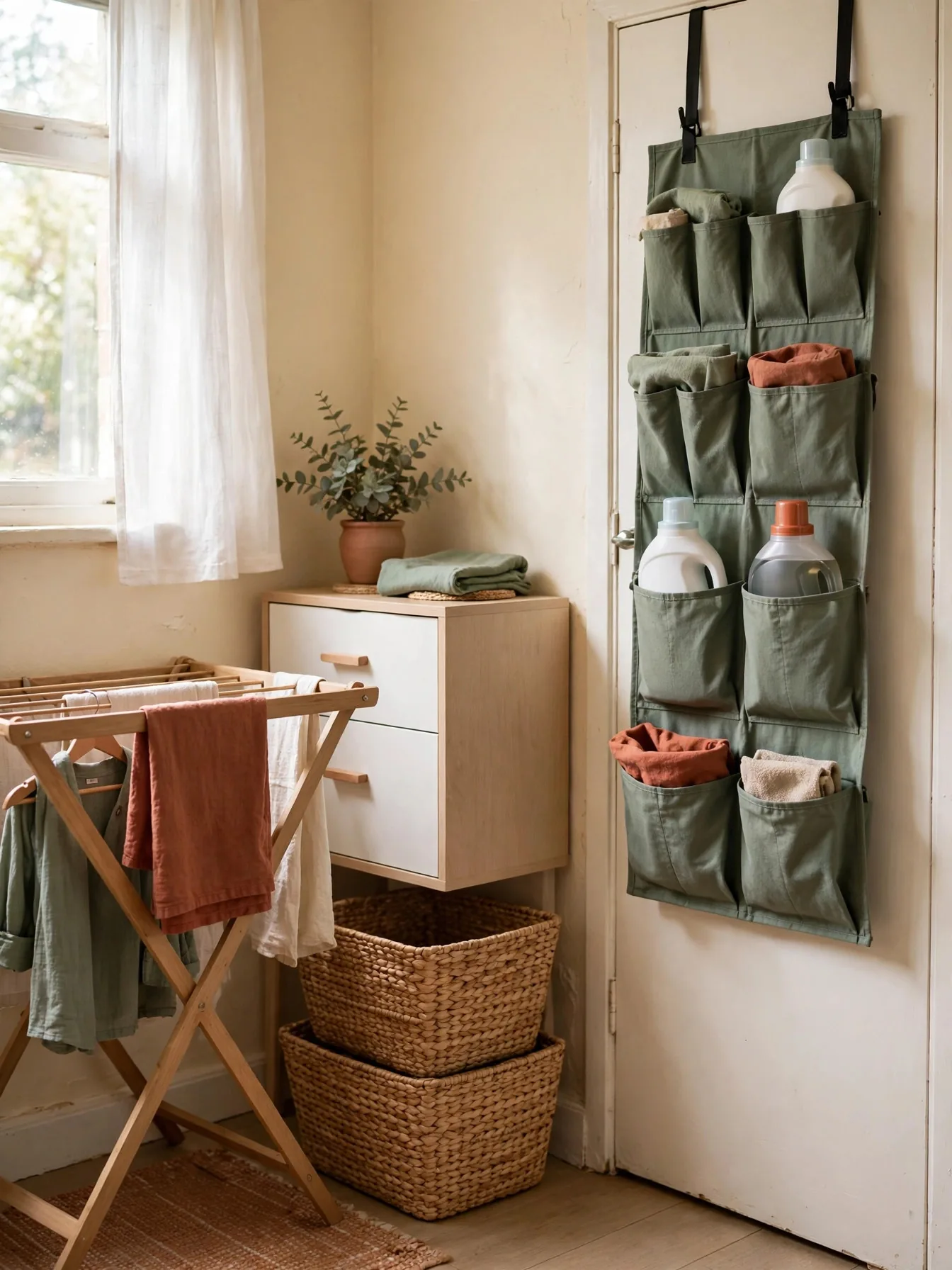
Over-door racks and pocket organizers are close to honestly damage-free, because the door and frame — not a painted wall — take the load. Their one real flaw is friction. The hooks that ride over the top of the door (most are sized for doors 1⅜–1¾ in / 3.5–4.4 cm thick) rub the same two spots on the door’s top edge and the frame’s paint every time the door swings. Over a year, that can wear a visible shiny patch or a paint chip on the frame, and a heavily loaded rack can make the door scrape or fail to latch, which tempts people to slam it — worse for the frame than the rack ever was.
The load itself is rarely the problem: package ratings of 10–35 lb (4.5–16 kg) total are common, and the hooks are steel. The problem is unpadded metal on painted wood, moving slightly, thousands of times.
Prevention. Wrap the hook contact points in the felt furniture pads or a strip of the foam tape the better racks include in the box. Check the door still closes and latches without pushing before you load the rack; if it does not, the hooks are too thick for that door and no padding will save the frame. Keep the heaviest items in the lowest pockets so the rack swings less.
Verdict: damage-free with padded hooks and a door that closes cleanly; frame-rub risk when bare metal rides painted wood. Typical cost: $12–$40.
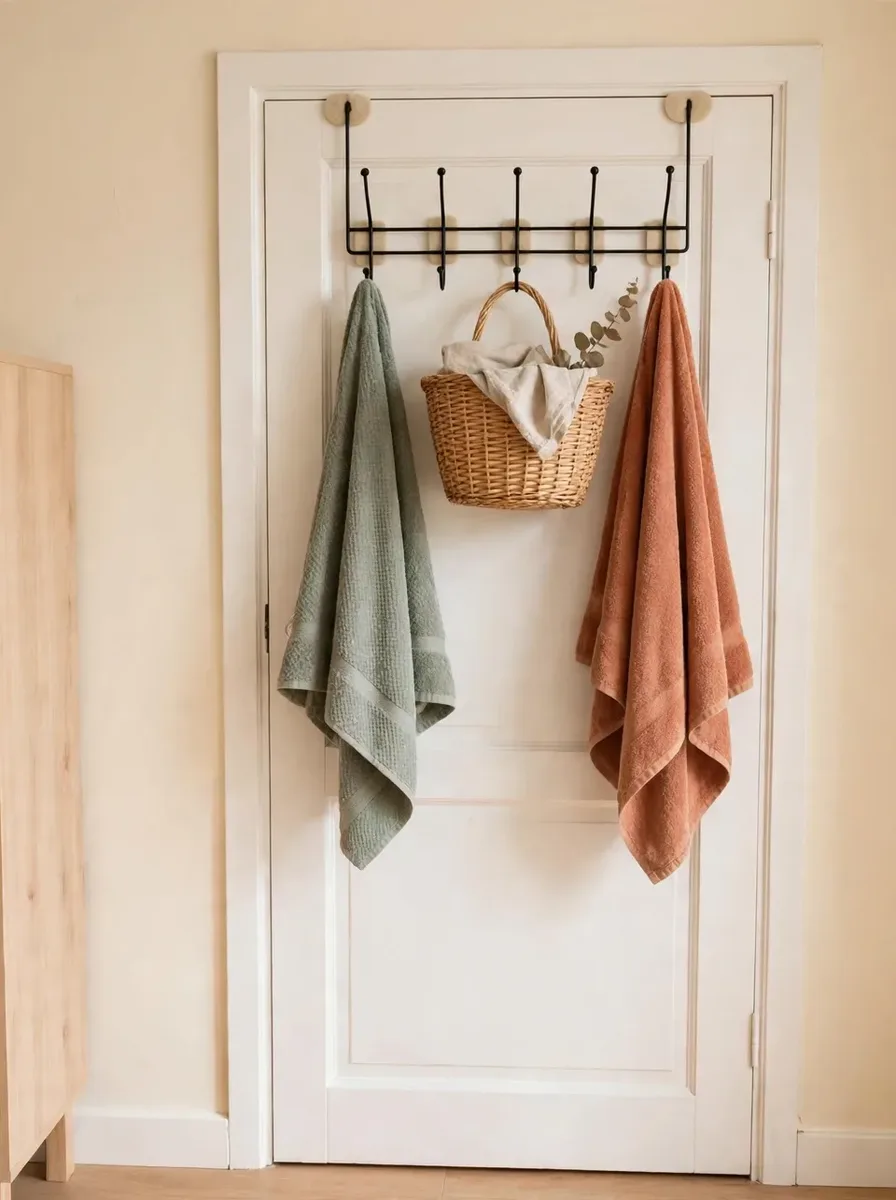
Required space: A door that still closes and latches without pushing once the hooks are on, with hooks sized for doors 1⅜–1¾ in (3.5–4.4 cm) thick.
Installation: Wrap the hook contact points in felt furniture pads or a strip of the foam tape the better racks include in the box, check the door still closes and latches without pushing before loading, and keep the heaviest items in the lowest pockets so the rack swings less.
Approximate dimensions: Most hooks are sized for doors 1⅜–1¾ in (3.5–4.4 cm) thick.
Rental-friendly limits: Package ratings of 10–35 lb (4.5–16 kg) total are common, and if the hooks are too thick for that door, no padding will save the frame.
Pros: Close to honestly damage-free, because the door and frame — not a painted wall — take the load.
Cons: Unpadded metal on painted wood, moving slightly thousands of times, can wear a visible shiny patch or a paint chip on the frame, and a heavily loaded rack can make the door scrape or fail to latch.
Suitable products: Over-door rack or pocket organiser ($12–$40) with felt furniture pads or foam tape for the hook contact points.
Nano Tape: Strong Hold, Sticky Goodbye
Nano tape — the washable, reusable gel tape sold in rolls 1–2 in (2.5–5 cm) wide — is the newest claimant to “damage-free” and the one whose claim needs the most asterisks. On glass, tile, metal and sealed stone it is excellent: strong, invisible, and it rolls off leaving nothing. On painted drywall it is a gamble, because the gel bonds aggressively and does not have a stretch-release mechanism. Peel it at the wrong angle, or off paint that is old, matte or less than fully cured, and it can lift the paint film in a tape-shaped patch — the most literally visible damage in this whole guide.
Its second issue is residue. Gel that has baked onto a wall through a warm summer can separate, leaving a translucent film that attracts dust. It usually rolls off with a fingertip or lifts with warm soapy water, but “usually” is doing real work in that sentence, and solvent residue removers are themselves a paint risk until tested.
Prevention. Keep nano tape off painted walls unless you have tested your exact paint in a hidden spot for at least a week, including removal. On hard surfaces it is a first-choice product. Remove it by rolling, never by pulling straight out, and wash and dry the tape if you plan to reuse it — its grip, and its clean release, both depend on the gel being clean.
Verdict: damage-free on hard, non-painted surfaces; the highest paint-lift risk of any method here when used on walls. Typical cost: $8–$15 per roll.
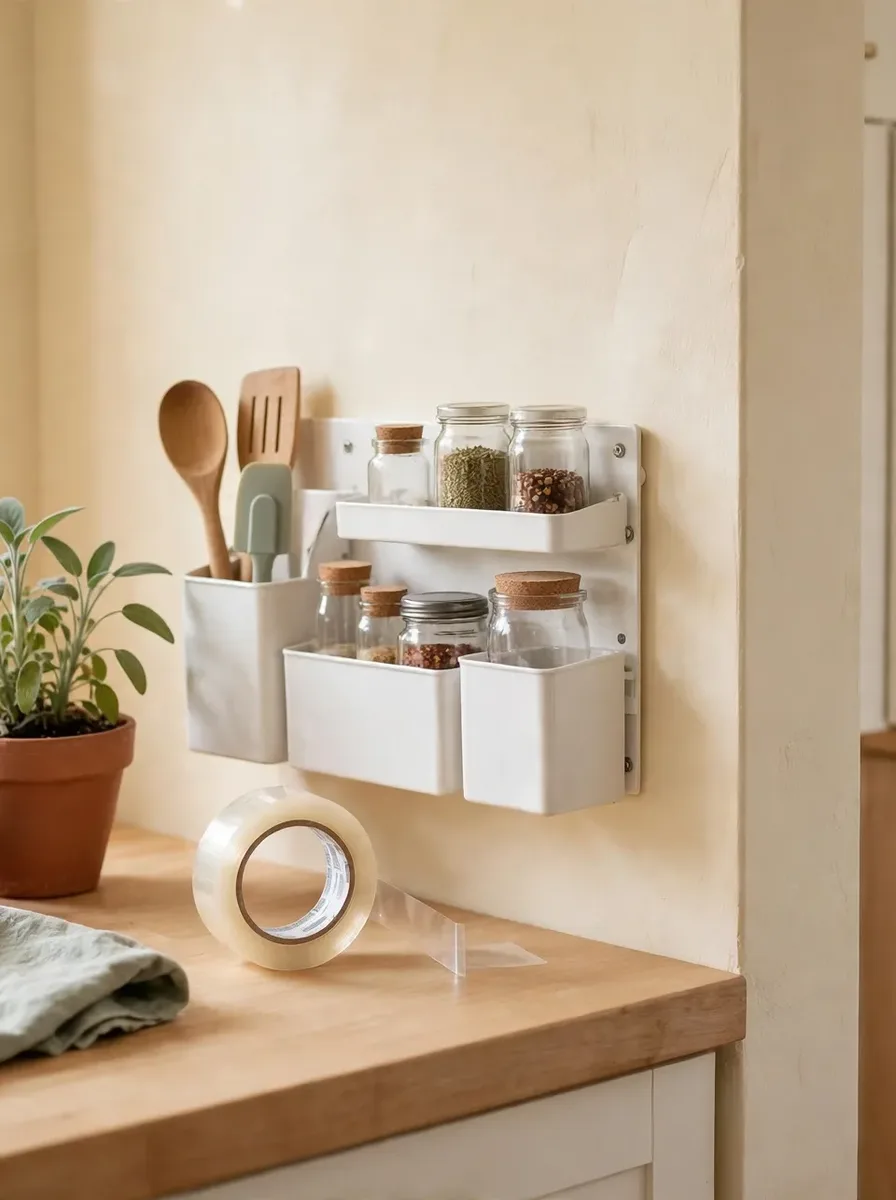
Required space: A hard, non-painted surface — glass, tile, metal or sealed stone — or, for painted walls, only a spot you have tested in a hidden place for at least a week, including removal.
Installation: Remove nano tape by rolling it off slowly with your thumb, never by pulling straight out, and wash and dry the tape if you plan to reuse it, since its grip and its clean release both depend on the gel being clean.
Approximate dimensions: Nano tape is sold in rolls 1–2 in (2.5–5 cm) wide.
Rental-friendly limits: It is often rated 1 lb per 4 in (10 cm) of tape, it has no stretch-release mechanism, and on painted drywall it is a gamble because the gel bonds aggressively and can lift the paint film in a tape-shaped patch.
Pros: On glass, tile, metal and sealed stone it is excellent — strong, invisible, and it rolls off leaving nothing.
Cons: The highest paint-lift risk of any method here when used on walls, and gel baked onto a wall through a warm summer can separate and leave a translucent film that attracts dust.
Suitable products: Nano tape roll ($8–$15 per roll).
Leaning and Freestanding Shelves: Scuffs, Not Stains
The oldest method is the most honest one. A leaning ladder shelf or a freestanding unit puts its weight on the floor — package ratings of 20–50 lb (9–23 kg) per shelf are common because the floor, not a bond, does the work — and touches the wall lightly or not at all. There is no adhesive to fail and no pressure hardware. What it can leave is humble: a scuff where the top rail rests against the wall, a faint rub line at skirting-board height, and dents in soft flooring under the feet of a heavily loaded unit.
All three are preventable with the cheapest supplies in this guide. A felt pad on each point where the frame meets the wall, and furniture cups or pads under the feet, reduce the risk to effectively zero — and a freestanding unit that never touches the wall at all is the only product in this audit that is damage-free on every surface, in every room, with no technique required.
The trade-off is not damage but space and money: leaning shelves are typically 24–30 in (61–76 cm) wide with feet 12–16 in (30–41 cm) deep, they cost $40–$100, and they cannot go where floor space does not exist — over a sink, inside a shower, on the back of a door. That is the real reason the riskier methods exist.
Verdict: the deposit-safest class overall; scuff risk only, eliminated by pads. Typical cost: $40–$100.
Required space: A floor footprint, typically 24–30 in (61–76 cm) wide with feet 12–16 in (30–41 cm) deep, with the frame touching the wall lightly or not at all.
Installation: Put a felt pad on each point where the frame meets the wall and furniture cups or pads under the feet, and a freestanding unit that never touches the wall at all needs no technique at all.
Approximate dimensions: Leaning shelves are typically 24–30 in (61–76 cm) wide with feet 12–16 in (30–41 cm) deep.
Rental-friendly limits: Package ratings of 20–50 lb (9–23 kg) per shelf are common because the floor, not a bond, does the work, but these shelves cannot go where floor space does not exist — over a sink, inside a shower or on the back of a door.
Pros: The deposit-safest class overall, and the only product in this audit that is damage-free on every surface, in every room, with no technique required when it never touches the wall.
Cons: The trade-off is space and money, and what it can leave is a scuff where the top rail rests, a faint rub line at skirting-board height, or dents in soft flooring under the feet of a heavily loaded unit.
Suitable products: Leaning ladder shelf or freestanding unit ($40–$100), felt pads, and furniture cups or pads for the feet.
The Honest Damage-Free Ranking
Pulling the audit together, the methods rank like this for a typical rental with painted drywall walls:
- Freestanding shelves that never touch the wall — zero wall contact, zero wall risk. Only the floor needs pads.
- Leaning shelves with padded contact points — a scuff is the worst realistic outcome.
- Over-door organizers with padded hooks — the wall is never involved; only the door frame needs protection.
- Suction shelves on glass or gloss tile — spotless removal, provided you re-press the cups and respect the load.
- Tension poles with padded ends — safe with pads, a ring risk without them.
- Stretch-release adhesive on cured, smooth paint — clean when every condition is met, unforgiving when one is not.
- Nano tape on painted walls — the strongest claim with the weakest evidence; keep it for hard surfaces.
Notice what the ranking is really measuring: distance from the paint. Every method that keeps its grip on the floor, the door or a hard surface beats every method that grips the paint itself — which is why the renter-guides hub treats wall-mounted adhesive as the last resort rather than the default.
Prevention: The Habits That Keep “Removable” Honest
Most damage from removable products is not caused by the product. It is caused by skipping one of these steps.
Test in a hidden spot first. Inside a closet, behind a door, low behind furniture. Install, load lightly, wait a week, remove. Ten minutes of patience tells you more about your paint than any label.
Match the method to the surface, not the room. The question is never “what works in a bathroom?” but “what is this exact wall made of, and what state is its paint in?” Gloss tile takes suction and nano tape beautifully and adhesive well; matte painted drywall reverses that order almost exactly.
Load to half the package rating. Ratings are measured on ideal surfaces with perfect installation. Half-rating loading is the single change that prevents the most failures — and a shelf that never falls never tears anything on the way down.
Pad every hard contact point. Felt pads cost almost nothing and neutralise the entire pressure-and-friction category: tension caps, leaning rails, over-door hooks, shelf feet. If a product touches your home somewhere, something soft should be in between.
Remove slowly, the manufacturer’s way. Stretch-release strips stretch. Nano tape rolls. Suction cups get a fingernail under the edge to break the seal before pulling. Every removal disaster in this guide starts with someone pulling a product straight off the wall. When the day comes to take everything down at once, our renter’s move-out storage checklist for getting your deposit back walks through the order and the inspection fixes.
Photograph before and after. A dated photo of each wall before you install and after you remove is your evidence if a mark is disputed — and it costs nothing.
Errors That Undo Good Storage
Trusting the box over the wall. The label says damage-free; your five-year-old matte paint disagrees. The wall always wins the argument, so test it.
Installing on fresh paint. Paint feels dry in hours but cures over roughly 30 days. Adhesive applied in week one bonds to a film that has not finished bonding to the wall — removal takes both.
Skipping the alcohol wipe. Dust and cooking grease under a strip or suction cup mean the bond is to the grime, not the surface. Weak bonds slip, and slipping products scrape.
Over-tightening tension poles. Firm is enough. Cranking a pole harder mostly drives the caps deeper into paint and flooring; it adds very little holding power.
Hanging weight from nano tape on a ceiling or above a bed. Even where nano tape is appropriate, a slow gel failure drops the load without warning. Keep it low, light and over nothing you care about.
Removing everything on moving day, in a hurry. Rushed removal is the top cause of adhesive damage. Take products down the day before the rush, slowly, while you still have time to wipe residue and touch up a scuff.
The Short Answer
“Damage-free” is not a product feature; it is an outcome you get when the method, the surface and the removal technique all line up. Freestanding, leaning and over-door products line up almost by themselves. Suction and tension line up with a pad and a monthly check. Adhesive lines up only on good paint with a patient removal — and nano tape, on painted walls, often does not line up at all. Choose by what your walls are, not by what the box promises, and every product in this guide can leave your rental exactly as you found it.